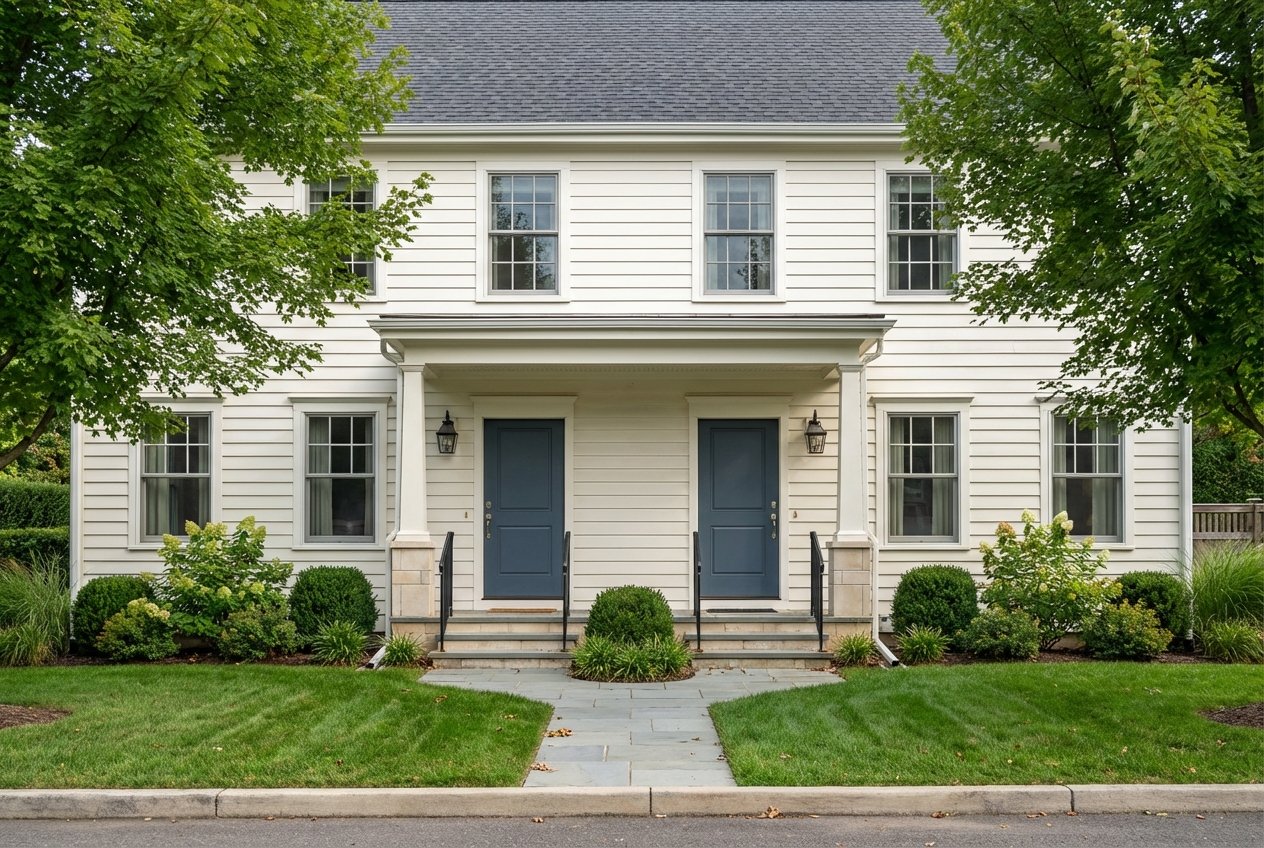
Thinking about buying a duplex or triplex in Trumbull but not sure where to start? In a town where nearly 9 out of 10 homes are owner occupied, finding the right small multi-family can feel both promising and tricky. You want steady rent, predictable expenses, and a plan that helps you move quickly when a good property hits the market. In this guide, you’ll see what’s actually available in Trumbull, where rents tend to land, how local taxes work, and a simple underwriting framework you can use right away. Let’s dive in.
Why Trumbull for multi-family investing
Stable suburban fundamentals
Trumbull is a predominantly owner-occupied market, with an owner-occupied housing rate around 89.7 percent according to the U.S. Census QuickFacts. A high ownership share often means a smaller rental pool and fewer purpose-built apartment buildings. Fewer turnkey listings can create competition for quality small multi-family deals.
Home values are solid, with recent reporting showing a typical town-level value in the mid-$600,000s and modest year-over-year gains. Rents are higher than the national average as well. RentCafe’s Trumbull rent snapshot shows average asking rents near $2,795, which supports income potential for well-located 2 to 3 bedroom units.
Demand drivers renters consider
School quality and everyday amenities are consistent demand anchors in Trumbull. Recent Niche district rankings place Trumbull Public Schools among higher-performing districts in Connecticut. Many renters also prioritize commuter access, and Trumbull’s proximity to Bridgeport and nearby rail nodes adds appeal for households that split time between town and regional job centers.
What you will actually find on the market
Typical small multi-family supply
Because Trumbull’s housing stock is heavily owner occupied, the small multi-family segment leans toward:
- Duplexes and two-family homes
- Older single-family homes with accessory apartments
- Occasional 3 to 4 unit conversions
Large, professionally managed complexes are less common inside town limits. You will want to track 2 to 4 unit comps closely through local MLS data to understand pricing per unit and per square foot.
Current rent ranges to expect
Market trackers indicate the following asking ranges in Trumbull. These are broad guideposts and can vary by building condition and location within town:
- 1-bedroom: about $2,200 to $2,400 (market asking)
- 2-bedroom: about $2,700 to $3,200 (market asking)
- 3-bedroom: often $3,500 to $4,200 or more, depending on finishes and space
Use multiple sources for rent comps. RentCafe’s Trumbull rent page is useful for professionally managed stock, while listing-level trackers and MLS data help with small 2 to 4 unit properties. Always verify with signed lease comps when possible.
Underwrite with discipline
A clear 8-step framework
Use this step-by-step approach to size up income, expenses, and value for a Trumbull duplex, triplex, or fourplex:
- Confirm the legal unit count, zoning, and permitted use with the town. Start with the Trumbull Building Department for permits and inspections.
- Build a realistic rent schedule. Capture in-place rents and nearby signed leases. Use asking rents as a ceiling and signed leases as the benchmark. Cross-check with RentCafe’s market overview.
- Calculate Gross Potential Rent (GPR). Sum market rent for each unit at 100 percent occupancy.
- Apply economic vacancy. Use at least 5 percent unless you have strong historicals to support less. This aligns with Fannie Mae’s multifamily guide.
- Estimate other income. Include parking, laundry, pet fees, and storage where applicable.
- Subtract stabilized operating expenses. A planning range of about 30 to 40 percent of Effective Gross Income is common for small, older multifamily, with local taxes and insurance driving variability. Industry analyses place many assets in the mid-30 percent range; use actuals when available and adjust for property age and condition. For context on typical operating patterns, see this industry reference on multifamily operations (e.g., operating expense studies).
- Deduct replacement reserves. A simple baseline is $250 per unit per year, then adjust after a detailed capital plan.
- Subtract annual debt service to see pre-tax cash flow. Use cap rate or GRM comparisons to test whether your price aligns with market value.
How Trumbull property taxes work
Connecticut municipalities often assess property at a fraction of market value. Town materials indicate Trumbull commonly uses an assessed value equal to 70 percent of market value for tax purposes. The current real and personal property mill rate is 35.69. You can confirm the latest figures through the municipal profile.
Here is the basic math: Assessed value equals 70 percent of market value. Annual tax equals assessed value multiplied by the mill rate divided by 1,000. For example, a $500,000 market value implies a $350,000 assessed value. At 35.69 mills, annual property tax is about $12,491. Base your underwriting on the current mill rate and ask the Assessor about upcoming revaluations. Some legacy town materials describe the 70 percent assessment practice for Trumbull’s taxable value calculations; you can review a background reference here for general context on assessment norms in town documents.
Sample numbers: a duplex illustration
Below is a simplified example to show how the pieces fit together. It is illustrative only and not a prediction for any specific property.
Assume a 2-unit building with market rents of $2,200 and $2,750 per month.
- Gross Potential Rent: $4,950 per month, or $59,400 per year
- Economic vacancy (5 percent): $2,970 per year
- Effective Gross Income: about $56,430
- Operating expenses (35 percent of EGI): about $19,750
- Stabilized NOI: about $36,680
If you believe the market supports a 6.5 percent cap rate, the implied value would be roughly $36,680 divided by 0.065, or about $564,300. Property taxes should be estimated separately using the current mill rate. Always layer real quotes for insurance, utilities, and maintenance to refine the expense line.
Financing paths that fit
1 to 4 unit purchases
For owner-occupants, conventional loans and FHA can both work. FHA’s 203(k) program can combine purchase and rehab for 1 to 4 unit properties if you plan to live in one unit. For a primer on how 203(k) financing is structured, see this FHA 203(k) overview. If you are a non-occupant investor, banks and portfolio lenders offer 1 to 4 unit loans, typically with higher down payments and rates.
5+ unit multifamily
Larger deals are commonly financed through agency lenders or CMBS. Underwriting standards and vacancy assumptions may differ from small residential loans. You can review vacancy and expense guidance in Fannie Mae’s multifamily guide to understand how lenders think about stabilized performance.
Compliance and permitting essentials
Zoning, conversions, and inspections
Before you convert a single-family to a two-family or reconfigure units, confirm local requirements, permits, and inspections with the Trumbull Building Department. Ask whether any rental registration, accessory dwelling, or health and safety checks apply to your specific plan.
Connecticut landlord-tenant highlights
- Security deposits are governed by state law. Review the Connecticut General Statutes on deposits, escrow handling, disclosures, and penalties. You can read the chapter here: Connecticut security deposit rules.
- Deposits may earn interest. The Connecticut Department of Banking publishes an annual deposit index and interest rate for security deposits. See the current rate and guidance here: CT Department of Banking deposit index.
- Evictions use a summary process with strict timelines and forms. Because procedures can change, consult official Judicial Branch resources and consider legal counsel for complex cases.
Field checklist before you write an offer
Use this quick list to move efficiently from interest to offer:
- Verify zoning and permitted use with the town.
- Pull assessor card and tax history. Confirm the current mill rate and the revaluation schedule using the municipal profile.
- Gather the current rent roll, copies of all leases, and utility bills. Note who pays what.
- Run local comps. Use 2 to 4 unit MLS listings and recent solds; cross-check market asking rents with RentCafe.
- Inspect mechanicals and big-ticket items. Get contractor estimates or a property condition assessment. Set reserves at a baseline like $250 per unit per year and adjust based on the building’s age and needs.
- Model three scenarios. Conservative: 5 to 7 percent vacancy and 35 to 40 percent operating expenses. Base case: 5 percent vacancy and 30 to 35 percent expenses. Upside: lower vacancy only if the building’s history supports it.
How we help investors in Trumbull
You get more than listings. You get a clear plan. Our team brings neighborhood-level comp work, objective rent and expense assumptions, and introductions to local lenders and contractors so you can underwrite fast and negotiate with confidence. We coordinate the details from offer to close, including inspections, appraisals, and paperwork, with the marketing, mortgage, and insurance resources of William Raveis behind you.
If you are considering a Trumbull duplex, triplex, or a small value-add, let’s talk through your goals, budget, and timeline. Schedule a free strategy call with The Zerella | Christy Team Of William Ravies Real Estate to get started.
FAQs
What small multi-family types are most common in Trumbull?
- You will mostly see duplexes, older single-family homes with accessory apartments, and occasional 3 to 4 unit conversions, with few large complexes inside town limits.
What are typical Trumbull asking rents by bedroom today?
- Trackers show about $2,200 to $2,400 for 1-bedrooms, $2,700 to $3,200 for 2-bedrooms, and $3,500 to $4,200 or more for 3-bedrooms, depending on condition and location.
How should I estimate vacancy and concessions when underwriting in Trumbull?
- Use at least a 5 percent economic vacancy assumption unless the building’s documented history supports less, aligning with Fannie Mae’s guidance.
How do Trumbull property taxes get calculated for rentals?
- Multiply 70 percent of market value by the mill rate, then divide by 1,000. With a 35.69 mill rate, a $500,000 home implies about $12,491 in annual taxes; confirm current rates on the municipal profile.
Can I use FHA to buy and rehab a Trumbull duplex if I live in one unit?
- Yes. FHA and FHA 203(k) can support 1 to 4 unit owner-occupied purchases. For the rehab-specific structure, see this FHA 203(k) overview.
What permits do I need to add or reconfigure an accessory apartment in Trumbull?
- Requirements vary by property. Start with the Trumbull Building Department to confirm zoning, permits, and inspections before you plan work.